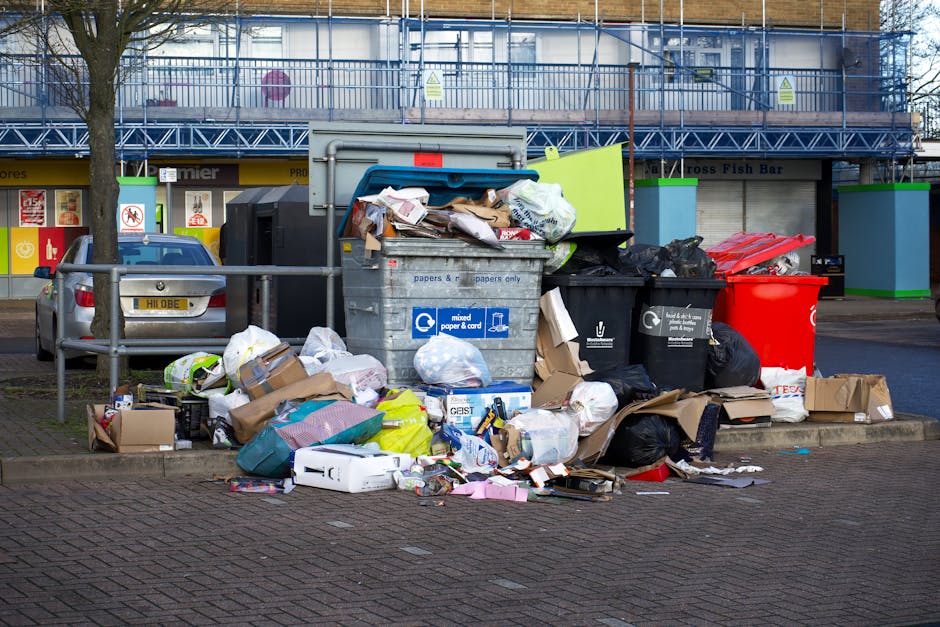
Camden Council Rubbish Rules for Holborn Residents
If you live in Holborn, rubbish collection can feel simple right up until the week bins are missed, a neighbour leaves bags in the wrong place, or you have a bulky item sitting by the hall that nobody seems sure about. Camden Council Rubbish Rules for Holborn Residents matter because the local basics are easy to get wrong in a busy central London setting. Shared entrances, narrow pavements, mixed-use buildings, and limited storage space all make waste handling a bit more complicated than it first looks.
This guide breaks the rules down in plain English. You will find out how the system generally works, what residents should watch for, where mistakes happen, and how to deal with furniture, garden waste, office waste, and clearances without creating hassle for yourself or your neighbours. We will also look at practical options if you need help with larger items, including related services such as waste removal, furniture disposal, and flat clearance.
Truth be told, most rubbish problems in Holborn are not dramatic. They are ordinary little issues that build up: a bin put out too early, a sack left beside the wrong container, or construction waste that should never have gone into household collection in the first place. Get the basics right and life is much calmer.
Table of Contents
- Why Camden Council Rubbish Rules for Holborn Residents Matters
- How Camden Council Rubbish Rules for Holborn Residents Works
- Key Benefits and Practical Advantages
- Who This Is For and When It Makes Sense
- Step-by-Step Guidance
- Expert Tips for Better Results
- Common Mistakes to Avoid
- Tools, Resources and Recommendations
- Law, Compliance, Standards, or Best Practice
- Options, Methods, or Comparison Table
- Case Study or Real-World Example
- Practical Checklist
- Conclusion
- Frequently Asked Questions
Why Camden Council Rubbish Rules for Holborn Residents Matters
Camden's rubbish rules are not just about keeping the street tidy. They affect collection reliability, neighbour relations, pest control, pavement access, and how smoothly your building runs day to day. In Holborn, where many people live in flats, converted buildings, mansion blocks, or mixed residential and commercial properties, waste can quickly become a shared problem.
Let's face it: one untidy bag can become six. A missed collection can lead to an awkward pile-up near the entrance. And once bags sit out too long, you start getting the familiar London cocktail of wind, rain, foxes, and complaints. None of that is fun.
Understanding the rules also helps you make sensible decisions about disposal. For example, if your household has more waste than the standard bins can handle, you may need to schedule a proper clearance rather than hoping the collection crew will somehow deal with it. That is where services such as home clearance or house clearance can save time and prevent mess.
Expert takeaway: In a dense area like Holborn, rubbish rules are really about shared responsibility. The cleaner and more predictable everyone is, the easier the whole building behaves.
How Camden Council Rubbish Rules for Holborn Residents Works
At a practical level, the system usually centres on a few simple ideas: separate waste correctly, present it at the right time, use the right containers, and avoid dumping items that are not meant for standard household collection. The exact details can vary depending on your building type, but the structure stays broadly the same.
Most residents need to think about these waste streams separately:
- General rubbish for items that cannot be recycled or reused.
- Recycling for clean, dry materials that belong in recycling containers.
- Food waste where the building or collection setup supports it.
- Bulky waste such as furniture, mattresses, or large appliances.
- Trade or construction waste from decorating, refurbishing, or building work.
That last point catches people out all the time. A few broken tiles, old plasterboard, and some ripped-out cupboards are not the same as normal household rubbish. If you have just finished a small renovation, you may need builders waste clearance rather than a standard bin day solution.
Collection timing matters too. In many parts of London, bins should be presented only when required and then brought back promptly if space and building rules allow. Leaving waste out too early can make a street look untidy and increase the chance of spillages. Late afternoon sun on a row of bags outside a block? Not ideal, and you know it.
For flats and managed properties, the building may have its own waste point, bin store, or concierge process. In those cases, residents still need to follow Camden's basic expectations, but the building rules can add another layer. If your property is especially awkward or cluttered, a loft clearance or garage clearance may be a better reset than trying to drag everything to the kerb in stages.
Key Benefits and Practical Advantages
Following the rules properly gives you more than a tidy pavement. It can make daily life noticeably easier. The benefits are practical, not theoretical.
- Cleaner shared spaces: Fewer bin bags in hallways, stairwells, and front gardens.
- Lower pest risk: Better waste containment reduces attraction for foxes and insects.
- Less neighbour friction: Shared buildings run better when everybody knows the routine.
- Fewer missed collections: Correct presentation and sorting reduce avoidable issues.
- More efficient clear-outs: You know when to use council systems and when to book a specialist service.
There is also a mental benefit, oddly enough. When waste is under control, a flat or office feels calmer. The room looks brighter, smells better, and suddenly the hallway does not feel like a storage problem pretending to be an entrance. Small thing, big difference.
For landlords, managing agents, and small businesses in Holborn, getting rubbish handling right can also reduce complaints and maintenance call-outs. If your premises produce regular non-household waste, it may be worth looking at business waste removal or even office clearance for larger clean-outs.
Who This Is For and When It Makes Sense
This guide is useful for anyone living or working in Holborn, but especially for people in buildings where waste handling is shared or slightly awkward. That includes renters, leaseholders, flat owners, landlords, office managers, and anyone moving out or decluttering before a change in occupancy.
You will probably need this information if you are:
- new to the area and learning the local collection rhythm
- dealing with a move-out or end-of-tenancy clear-up
- sorting out a buildup of old furniture or storage waste
- planning light renovation or decorating work
- running a small office, studio, or professional space in central London
- trying to avoid neighbour complaints or building-management notices
It also makes sense when you are not sure whether your items count as ordinary household rubbish. A worn-out chair, a broken wardrobe, and a stack of packaging all sound simple enough. But once they are on your floor, taking up the only clear patch of space, the real question becomes: what is the best lawful and practical way to move them out?
If the answer is not the regular bin, then a targeted clearance is usually the cleanest option. A furniture clearance can be a lot less stressful than trying to coordinate bit-by-bit disposal over several collection cycles.
Step-by-Step Guidance
If you want to stay on the right side of Camden's rubbish expectations, work through the process in a sensible order. No need to overcomplicate it.
- Identify the waste type. Separate household rubbish, recycling, food waste, bulky items, and anything from works or business activity.
- Check your building setup. Find out where bins are stored, when they should go out, and whether your block has special instructions.
- Sort recyclable items properly. Keep recyclables clean and dry where possible. Food contamination is a common reason bins get rejected or become messy.
- Bag or contain waste securely. Loose rubbish creates litter, smells, and a lot of unnecessary aggravation.
- Do not place prohibited items in household bins. Hazardous, electrical, or construction waste often needs separate handling.
- Move bulky waste out responsibly. Arrange collection or a suitable disposal method rather than leaving items in a communal area.
- Return bins promptly after collection. This is one of the simplest ways to keep your street and block orderly.
Here is a realistic example. Say you have moved a bed, a desk, and several bags of unwanted clothes into the hallway before a flat move. The clothes can be sorted for reuse or textile recycling, the small household waste can go into normal bags, but the bed and desk are bulky items. If you try to force everything into one disposal method, you usually end up with delays or a mess. Split the job into the right channels and it gets much easier.
For awkward mixed clear-outs, especially in rented flats or basement spaces, flat clearance is often the cleanest route. If the space is larger or more cluttered than expected, home clearance can cover the full job in one go.
Expert Tips for Better Results
Over the years, one thing becomes clear: the best waste jobs are the boring ones. The predictable ones. The ones where nobody has had to guess.
- Keep a small sorting routine. A quick weekly review stops rubbish from taking over cupboards, balconies, and utility corners.
- Do not let one awkward item delay the rest. People often keep "temporary" junk for months because of one chair leg or one broken drawer. Just deal with it.
- Use labels in shared bins stores. In flats, a simple note about bin day or recycling rules can quietly improve behaviour.
- Book clearances before a deadline. End-of-tenancy dates, viewings, and refurbishment starts always arrive faster than expected.
- Protect the route out. If you are moving furniture through a narrow stairwell, clear the path first. Saves scrapes, noise, and swearing. A little.
One useful habit is to think in categories rather than item by item. For example: "three bags of household rubbish, one old wardrobe, one box of cable offcuts, and a broken lamp" is easier to deal with than a vague "I need to get rid of stuff." Specificity helps you choose the right disposal method. Simple, but powerful.
If you are worried about what happens after collection, look at providers who explain their handling and routing clearly. Pages like recycling and sustainability can help you understand how a professional service approaches sorting and recovery.
Common Mistakes to Avoid
Most rubbish problems are avoidable. Honestly, that is the frustrating bit.
- Leaving waste outside too early. It creates clutter and can attract attention from neighbours or pests.
- Mixing recyclables with general rubbish. Once contaminated, recycling becomes far less useful.
- Using the wrong container for bulky items. Large furniture does not belong in normal communal bins.
- Assuming all waste is the same. Household, business, and builders waste usually have different handling needs.
- Forgetting building rules. Many blocks have their own instructions beyond the council basics.
- Dumping items in corridors or by fire exits. That is both inconsiderate and unsafe.
Another common mistake is waiting until the last minute. You mean to sort it next weekend, then the boxes stay there, then they become a small tower of regret. We have all seen it. Most people know the feeling before they admit it.
For larger or heavier jobs, do not force a standard collection to do work it was never meant to do. That is when a dedicated service, such as furniture disposal or waste removal, can prevent a lot of hassle.
Tools, Resources and Recommendations
You do not need fancy equipment to handle rubbish well, but a few simple tools make the process easier.
- Heavy-duty bin bags for general waste and mixed household clear-outs.
- Labels or marker pens to separate recycling, donation items, and rubbish.
- Gloves for moving dusty or awkward items safely.
- Sturdy boxes for sorting loose household items before disposal.
- Measuring tape if you need to confirm whether furniture will fit through doors and down stairs before moving day.
On the planning side, it helps to compare your options before you start lifting. If you are clearing a spare room, attic, or rental flat, you might need only a light sort-out. If you are dealing with several large items, a full-service clearance is usually more efficient. For example, loft clearance works well when you have years of stored items stacked in a cramped roof space, while garage clearance is handy when old tools, boxes, and broken household bits have slowly taken over.
And if the issue is work-related rather than domestic, business waste removal may fit far better than trying to adapt household routines to office rubbish. Different waste, different pressure, same need for calm.
Law, Compliance, Standards, or Best Practice
Waste handling in London sits within a wider framework of public health, property management, environmental responsibility, and, for business premises, legal duty of care principles. Without drifting into legal jargon, the safest practical approach is simple: dispose of waste responsibly, keep public areas clear, and use a licensed, appropriate route for items that do not belong in ordinary bins.
For residents, the main compliance risk is usually not complicated law. It is ordinary non-compliance: putting waste out incorrectly, dumping items in communal areas, or mixing waste streams in a way that creates problems for the building or collection crews. For landlords and managing agents, there is also a strong best-practice expectation that shared bin areas stay accessible, sanitary, and easy to use.
Trade and renovation waste deserve special caution. Waste from construction, dismantling, or large refurbishments often needs separate handling, and it should never be assumed that household collection will cover it. That is why builders waste clearance is such a useful service category for central London properties where even a small project can generate more mess than expected.
In practical terms, good compliance looks like this: know your waste type, keep it contained, use the right collection route, and avoid blocking shared spaces. It sounds almost too basic, but that is the point. Most trouble starts when the basics are skipped.
Options, Methods, or Comparison Table
If you are deciding how to deal with rubbish in Holborn, it helps to compare the common options side by side. The right method depends on volume, item type, time pressure, and whether you are dealing with domestic or business waste.
| Option | Best for | Strengths | Limitations |
|---|---|---|---|
| Standard council collection | Routine household rubbish and recycling | Convenient, familiar, usually the first stop | Not suitable for bulky items, trade waste, or large clear-outs |
| Self-sorting and multiple trips | Small amounts of waste when you have time and transport | Flexible and low-cost if you can manage it | Time-consuming, awkward in central London, and not ideal for heavy items |
| Specialist waste removal | Mixed waste, bulky items, or rushed clearances | Efficient, less lifting, easier for flats and offices | Usually chosen for convenience rather than because it is the cheapest route |
| Targeted clearance service | Furniture, lofts, garages, homes, flats, offices, or renovation debris | Handles difficult jobs in one visit | Needs accurate planning so the right service is booked |
To be fair, most Holborn residents do a bit of all four at different times. You might use council collection for the weekly basics, then specialist help when a move, refit, or family tidy-up gets out of hand. That is completely normal.
If you are comparing fuller-property services, you may also find house clearance and home clearance useful depending on how much needs to go and how quickly you want the space back.
Case Study or Real-World Example
A fairly typical Holborn scenario goes like this. A tenant is moving out of a third-floor flat in a converted building near a busy road. The flat has an awkward stairwell, no lift, and a shared bin store that is already tight on space. Over a few months, the occupant has accumulated a broken chair, a small desk, three bags of mixed clutter, and a couple of kitchen items that do not fit in the regular collection cycle.
At first, the plan is to "just put it out gradually." Then moving day gets closer. Suddenly the stairwell feels smaller, the hallway looks messier, and the bags are in the way of everything. Not great.
The cleaner solution is to sort the items into clear groups, remove anything reusable or recyclable, and book the right clearance method for the remaining bulky waste. In many cases, that means using a flat- or furniture-focused service rather than trying to solve the problem through the weekly bin route. The key lesson? Small waste jobs become easier when handled early. Left too long, they start to chew up your time and headspace.
That same logic applies to offices and home offices too. A few old chairs and a printer or two can snowball fast, especially when nobody wants to be the person who throws out the wrong thing. A planned office clearance avoids that awkward pile-up.
Practical Checklist
Use this checklist before you put anything out or book a clearance. It keeps the job simple and helps you avoid the usual slip-ups.
- Have I identified the waste type correctly?
- Have I separated general rubbish, recycling, and bulky items?
- Does my building have special waste rules or bin-store instructions?
- Is anything hazardous, electrical, or construction-related?
- Will the items fit in normal collection containers?
- Do I need a specialist service for furniture or mixed waste?
- Have I kept corridors, fire exits, and shared spaces clear?
- Is everything securely bagged or contained?
- Have I planned the job before the deadline, not after it?
- Do I know who to contact if the waste situation is bigger than expected?
If you tick most of those boxes, you are already ahead of the game. Not glamorous, maybe, but effective.
Conclusion
Camden Council Rubbish Rules for Holborn Residents are really about making urban living workable. When you understand how waste should be sorted, timed, and presented, you reduce mess, avoid friction, and make space feel more liveable. That matters whether you are in a compact studio, a family flat, a basement office, or a larger home that has slowly filled with the sort of things everyone promises to deal with later.
The best approach is usually straightforward: know your waste type, respect shared areas, and choose the right disposal method for the job. For routine waste, keep to the local system. For bulky, mixed, or heavy clear-outs, use a service that matches the task properly. That saves time, energy, and a lot of unnecessary lifting. And frankly, your back will thank you.
Get a free quote today and see how much you can save.
If you want a company background before making a decision, you can also learn more on the about us page or review the practical details in pricing and quotes.
Frequently Asked Questions
What are the main Camden Council rubbish rules Holborn residents should know?
The main rules are to separate waste properly, use the correct containers, present bins at the right time, and avoid leaving rubbish in communal areas or public spaces. Bulky or specialist waste usually needs a different route.
Can I leave bin bags outside my flat for collection whenever I want?
Usually not. In shared buildings and busy streets, rubbish should be put out according to the building and collection arrangements, then brought back in promptly where that applies. Leaving bags out too early can create clutter and attract pests.
What counts as bulky waste in Holborn?
Bulky waste normally includes larger items such as sofas, chairs, wardrobes, mattresses, desks, and similar items that do not fit in standard household bins. Some electrical items also need separate handling.
Do I need special help for furniture disposal?
If the furniture is large, heavy, awkward, or more than you can reasonably move yourself, then yes, specialist help is often the better option. It saves time and reduces the risk of damage in tight stairwells.
Can I use household bins for builders waste?
Generally, no. Waste from decorating, demolition, or refurbishment often needs a dedicated route because it can include rubble, plasterboard, timber, and other materials that are not suited to normal collections.
What should I do if my bin collection is missed?
First, check whether your waste was presented correctly and whether there were local collection changes. If the issue continues, speak with the relevant building contact or report it through the appropriate local process. For large amounts of waste, a clearance service may be quicker.
Is recycling worth the effort in a busy London flat?
Yes, because a small amount of sorting each week quickly reduces overflow and keeps general rubbish manageable. In a flat, that can make a surprising difference to space and smell.
What is the best option for an end-of-tenancy clear-out?
That depends on volume. A small clear-out may only need sorting and bin-day planning, but larger jobs are often easier with flat clearance or home clearance, especially if furniture and mixed clutter are involved.
How do business waste rules differ from household rubbish rules?
Business waste usually needs its own management approach because the volume, type, and duty of care expectations are different from household rubbish. Offices, studios, and small premises often need a tailored collection plan.
What if I am not sure whether an item is recyclable or not?
If in doubt, separate it from contamination-sensitive recycling and check the local guidance available to you through your building or collection setup. When the item is large or mixed, specialist removal is often safer than guessing.
Can a clearance service help with mixed rubbish and furniture together?
Yes. That is often exactly when a professional clearance makes sense, because one visit can deal with household clutter, old furniture, and bulky waste without you having to manage several disposal methods.
What is the easiest way to avoid rubbish problems in a Holborn building?
Stay consistent. Sort waste early, keep shared areas clear, label or separate items properly, and deal with bulky waste before it becomes a hallway problem. A little routine prevents a lot of hassle.
If you need a quick next step, review the service details that fit your situation and choose the simplest lawful route. That is usually the smartest move, and the least stressful one too.
For related information on standards and business practices, you may also find insurance and safety and health and safety policy useful when comparing providers.